
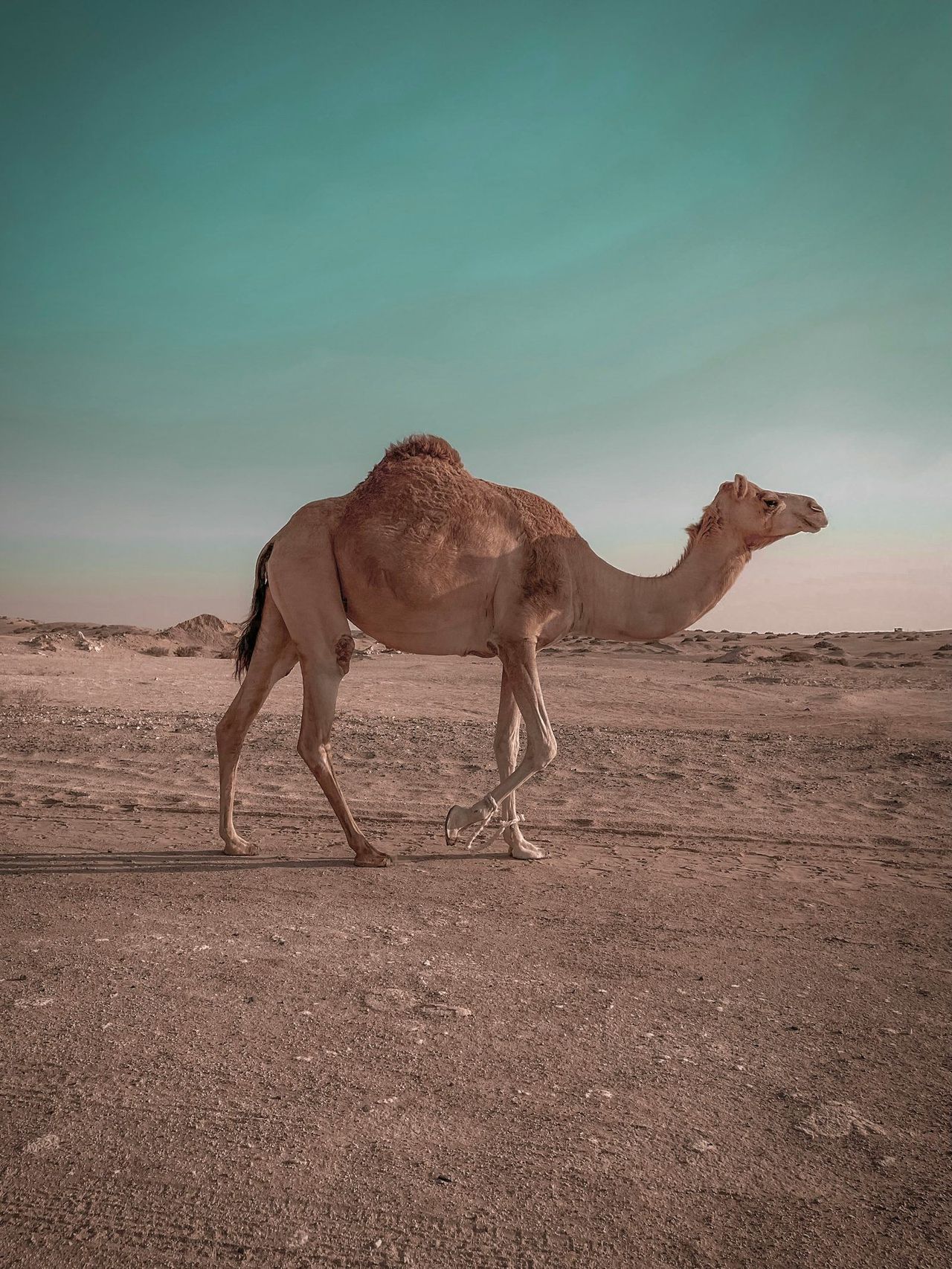
This page provides a comprehensive scientific framework for understanding camel longevity, with particular focus on racing, breeding, transport, and working camels. Camels possess unique physiological adaptations that profoundly influence aging, resilience, and lifespan.
Defining Longevity in Camels
Camel longevity must be assessed through three dimensions:
- Chronological lifespan — total years lived
- Healthspan — years lived free of chronic disease, injury, and metabolic dysfunction
- Performance longevity — years a camel can safely and effectively perform its intended role
Natural Longevity and Evolutionary Adaptation
Camels evolved in extreme environments characterised by:
- Water scarcity
- Thermal stress
- Nutritional variability
- Long-distance locomotion
These pressures produced adaptations that favour:
- Metabolic efficiency
- Heat tolerance
- Stress resilience
- Slow, steady aging under natural conditions
Modern management can either support — or undermine — these adaptations.
Lifespan and Aging Phases
Camels commonly live 35–45 years, with some exceeding 50 under optimal care.
3.1 Growth and Development (0–6 years)
- Skeletal growth continues longer than in many mammals
- Joint surfaces mature slowly
- Neuromuscular coordination develops gradually
3.2 Peak Performance Phase (7–15 years)
- Optimal endurance capacity
- High cardiovascular efficiency
- Strong metabolic flexibility
3.3 Transitional Phase (16–25 years)
- Gradual decline in recovery speed
- Increased joint and tendon stiffness
- Early metabolic shifts
Training and workload must be adjusted proactively.
3.4 Senior Phase (26+ years)
- Muscle mass loss
- Reduced thermoregulatory reserve
- Dental and digestive efficiency decline
Unique Physiological Traits
4.1 Heat Tolerance and Thermoregulation
Camels tolerate extreme body temperature fluctuations, reducing water loss. However, chronic artificial cooling can impair natural adaptation, and sudden environmental shifts increase physiological stress.
4.2 Water Deprivation and Rehydration
Camels can withstand significant dehydration, but repeated extreme dehydration accelerates renal aging, and improper rehydration stresses cardiovascular systems.
Controlled hydration strategies preserve long-term health.
4.3 Fat Metabolism and Energy Storage
Fat stored in the hump supports energy needs, influences hormonal signalling, and affects metabolic aging. Excessive fat accumulation accelerates metabolic decline.
Musculoskeletal Aging
5.1 Muscle Tissue
Age-related changes include reduced endurance recovery, slower repair after long-distance exertion, and increased susceptibility to fatigue.
Longevity training favours endurance preservation over speed maximisation.
5.2 Tendons and Ligaments
Camels experience progressive collagen stiffening, accumulated microdamage from repetitive load, and delayed healing with age.
Most performance-limiting injuries develop gradually and silently.5.3 Joint Health
Joints are adapted for long-distance locomotion — not repeated maximal intensity. Hard surfaces and improper training accelerate degeneration.
Cardiovascular and Respiratory Aging
With age, cardiac output efficiency declines, recovery heart rate increases, and pulmonary elasticity decreases.
Endurance performance depends more on recovery efficiency than peak speed.
Metabolic and Endocrine Aging
Age-related shifts include:
- Reduced insulin sensitivity
- Altered cortisol response to stress
- Slower glycogen replenishment
- Increased oxidative stress
Inflammation and Immune Aging
Chronic low-grade inflammation:
- Accelerates tissue degeneration
- Impairs healing
- Increases disease susceptibility
Inflammation control is central to camel longevity.
Neurological and Sensory Aging
Aging camels may experience reduced coordination under fatigue, slower reaction times, and decline in visual acuity.
These changes often appear before overt performance decline.
Performance Load and Longevity
10.1 Cumulative Stress Over Time
Longevity is affected more by total lifetime workload than by isolated events.
10.2 Recovery as a Longevity Factor
Insufficient recovery prevents tissue repair, accumulates microdamage, and accelerates biological aging.
Rest is a physiological requirement — not a weakness.
Nutrition for Camel Longevity
Key principles:
- Fibre-rich diets aligned with natural feeding behaviour
- Balanced protein intake
- Anti-inflammatory fat balance
- Micronutrient adequacy
- Avoidance of overfeeding
Environmental and Management Influences
Longevity is shaped by:
- Flooring and terrain
- Housing ventilation
- Social stress
- Handling practices
- Transport frequency
Environmental stress often outweighs genetic factors.
Measuring Biological Age in Camels
Chronological age alone is insufficient. Biological age indicators include:
- Recovery speed
- Injury frequency
- Body condition stability
- Behavioural changes
- Biomarker trends
Two camels of the same age may differ greatly in biological resilience.
Longevity-Oriented Veterinary Care
Preventive veterinary focus includes:
- Early musculoskeletal screening
- Metabolic monitoring
- Dental health maintenance
- Conservative intervention strategies
Longevity medicine prioritises early detection over crisis treatment.
Ethical Framework for Camel Longevity
Longevity interventions must never:
- Prolong suffering
- Mask decline for competition
- Override welfare signals
- Justify excessive exploitation
Extending life without quality is unethical.
Transitioning to Later Life
Gradual transition preserves musculoskeletal health, prevents metabolic shock, and supports psychological stability.
Abrupt retirement accelerates decline.Future Directions
Emerging areas include:
- AI-based performance risk prediction
- Precision hydration strategies
- Biomarker-guided workload management
- Genetic resilience profiling
The future of camel longevity lies in anticipation, not reaction.
Camels are biologically designed for endurance, resilience, and longevity. Their decline is rarely inevitable — it is usually managed into existence. Responsible longevity science protects the animal first and performance second.